The practical guide
Flamenco and dinner in Granada
How to plan a flamenco show with dinner in Granada's Albaicín: the hill, the viewpoint, what you will hear, the room's rules and how to dress.
Book dinner and flamenco ↗Quick answer
For a flamenco show with dinner in Granada, plan the evening around the Albaicín hill. Walk up through its narrow lanes, stop at the San Nicolás viewpoint for the Alhambra, and be at your table before the show. The show is visual, with announcements in Spanish and English. Expect silence in the room, no flash and no video, and wear shoes that cope with cobbles.
Why the Albaicín for an evening out
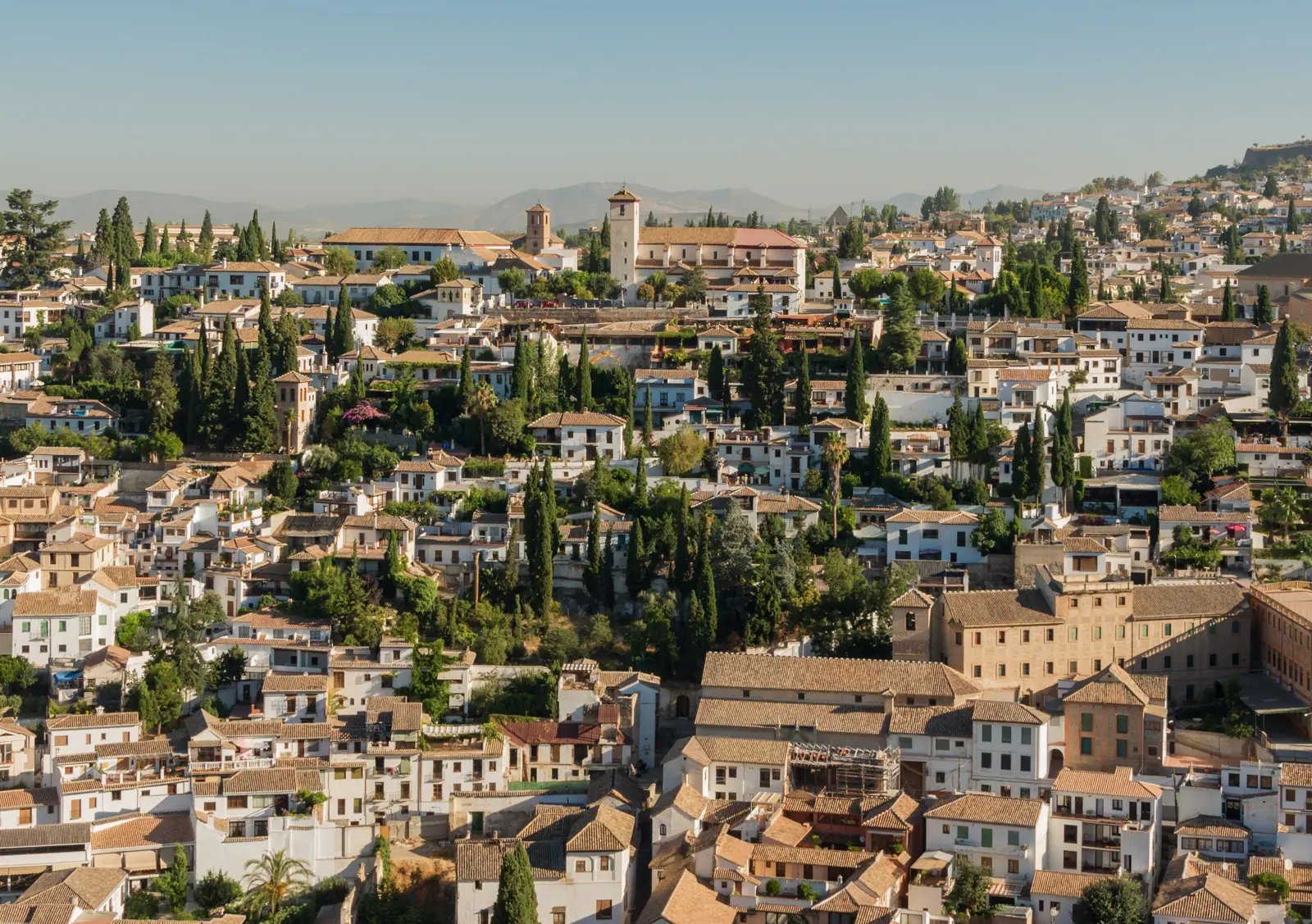
The Albaicín is the old quarter on the hill that faces the Alhambra. Wikipedia describes it as keeping the medieval street plan it had under the Nasrids, and says it was declared a World Heritage Site in 1994, as an extension of the Alhambra's. That history is why an evening here feels different from one in a modern district. The streets are narrow, the houses are whitewashed and the lanes bend around hidden gardens. A tablao in a garden house fits its setting, and the walk to it is part of the night.
Getting up the hill
Expect a climb: the walk up is part of the evening. Lanes are narrow and many are cobbled, which suits flat, stable shoes more than heels. Leave extra time, because the quarter's medieval plan means you may take a few wrong turns, and a map on your phone helps. Jardines de Zoraya is at Calle Panaderos 32, and the booking page describes it as minutes from the San Nicolás viewpoint, so use that viewpoint as a landmark. If you can, look at the route in daylight, and save the address offline. If you are unsure of the way, ask at your hotel desk to point it out on a map before you set off.
The San Nicolás viewpoint first
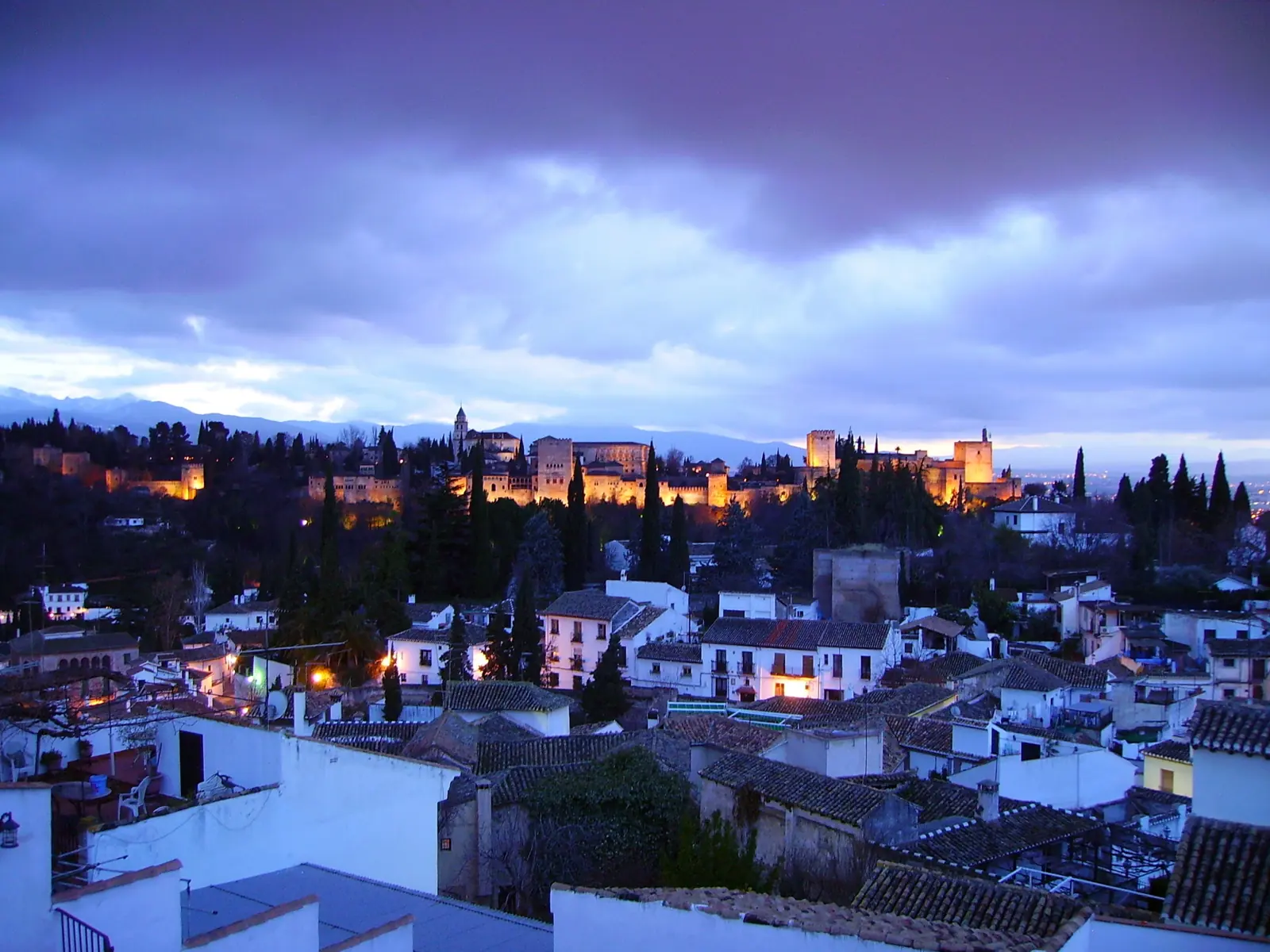
Wikipedia calls the Mirador de San Nicolás a famous lookout with views of the Alhambra from the top of the Albaicín hill. It is a public square, and people gather there as the light changes. If your session allows, fit in a short stop before dinner. Check the start time on your confirmation first, and leave the viewpoint early enough to walk to the table without hurrying. The Alhambra's red walls and towers are the picture most visitors carry home, and the viewpoint is a public square. Phones come out in force there, so give yourself time to find a place at the wall instead of rushing in at the last moment.
A plan for the whole evening
Think of the night as a sequence: the climb, a pause at the viewpoint, the dinner, the show and the walk back down. None of it needs a tight schedule, but the show does not wait, and a late arrival is admitted only at the next musical break. Read the start time on your confirmation, count back from it, and leave room for the lanes. After the show, plan your way down before you leave the table, and ask the venue how guests usually get back to the centre. A lit, busy route is easier on tired legs than a shortcut through quiet lanes, so favour the main streets.
What dinner is like
Dinner comes before the show and is part of the ticket. The booking page lists menu options for different dietary needs, and the venue asks to be told about allergies ahead of time. Drinks and dishes from the menu can be ordered before the show begins. Because tables are assigned in booking order, you may be seated nearer the stage or toward the side, depending on how early you booked. Eat in your own time, but finish ordering before the performance starts. If you have chosen a menu in advance, mention it when the server arrives, so the kitchen does not have to guess. Ordering early also means the server is free to leave you in peace when the show begins.
What flamenco is
UNESCO's 2010 entry for flamenco, on its intangible heritage list, describes a blend of voice, dance and guitar. It names Andalusia as the home ground and credits the Gitano community with a central part in shaping the art. Three words matter: cante for voice, baile for dance, toque for guitar. A tablao presents all three in a small room, which is where flamenco's closeness shows, and an hour is enough to hear how they answer one another. Cante jondo, the deep song, is the most serious group, and Wikipedia ties it to the Romani experience of suffering and marginalisation.
What you will hear and see
The show is made of palos, the named forms of flamenco, and Wikipedia counts more than fifty. You may hear the slow, solemn soleá, the festive tangos or a granaína, a variant of the Granada fandango. The singer is usually seated, the guitarist leads as much as follows, and the dancer's footwork is a rhythm of its own. Do not worry about naming each piece. Listen for the change of mood, and for the moment the clapping or the heels take over the room. The first palo may be slow and spare, and a later one may be quick and bright, which is part of how the hour is built.
Language and announcements
You do not need Spanish. The performance is mostly visual, and Spanish and English are both used for the welcome and announcements. Flamenco lyrics are sung in Spanish, so the mood carries more than the words. If you want to follow the meaning, read a short note about the palos beforehand, and leave the phone in your pocket once the music starts. A first-timer who listens for the voice, the guitar and the feet will follow the evening without knowing a single word. The Spanish and English announcements fill in the rest, so you will know who is performing and what is coming next. It also helps to arrive a little early, so you can settle at the table and let the room's sound wash over you before the show.
Manners in the room
The room asks for silence during the show, and the house reserves the right to refuse admission to anyone who breaks that rule. Do not use flash and do not record video. A late guest waits for the next musical break. Keep phones silent and in a pocket. A one-hour show goes quickly when the room stays quiet, and the quiet is what lets a singer work at the softest end of the voice. Treat that quiet as part of the ticket. The same rule covers phones, whispering and rustling bags, so settle in before the lights change.
Children and dress
All ages are welcome, though the evening may suit children from about eight. Casual clothes are accepted, and the suggestion for the evening is semi-formal. In practice that means something comfortable for a long dinner, and shoes that handle cobbles on the way up. No pets, apart from assistance dogs. Bring a layer for the walk if the evening turns cool, and keep your hands free for the stairs. Wear something you can sit in comfortably for a dinner, because tables are what you will be sitting at.
Who this isn't for
Anyone who wants a quick, drink-sized look at flamenco should pick another night. It also suits travellers poorly who dislike a seated, quiet room, or who cannot manage a climb through cobbled lanes after dark. If you want something shorter and closer, a cave-room show is a different format. If you want the full evening with dinner in a garden house, this ticket is built for it, and the rest of this plan will help you enjoy it. Settle the practical points early and the evening will feel unhurried.
Frequently asked questions
Where is the venue?
At Calle Panaderos 32, in the Albaicín in Granada, minutes from the San Nicolás viewpoint.
Is the climb hard?
The Albaicín is a hill of narrow, often cobbled lanes. Allow extra time and wear flat shoes.
Do I need Spanish?
No. The show is mostly visual, and both Spanish and English are used for announcements.
Can I take photos?
Do not use flash and do not record video. Keep phones silent during the performance.
What should I wear?
Casual clothes are accepted. Semi-formal is the suggestion for the evening.
Sources